
Defibrillators for Schools and Colleges
A defibrillator in a school or college is there for everyone on site: pupils, staff, parents and visitors, and the clubs and hirers who use the buildings out of hours. This guide covers what to look for, where to keep it and how to look after it.
Why a school needs to plan for cardiac arrest
Sudden cardiac arrest is rare in children, but a school site is busy all day and is often used in the evenings and at weekends by clubs, hirers and events. Adults on site, including staff, parents and visitors, are more likely than pupils to need a defibrillator. What matters is that one is close, that everyone knows where it is, and that it can be used on a child as well as an adult.
What to look for in a school AED
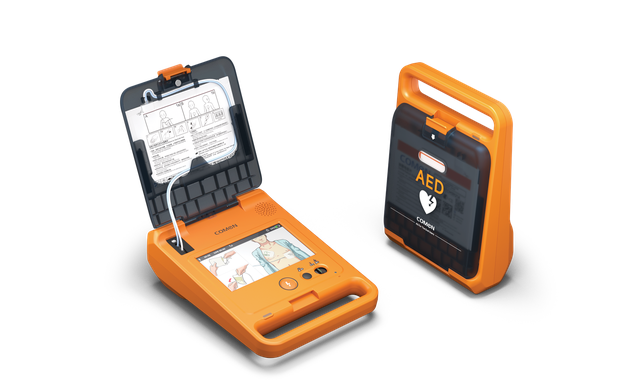
- Child and adult useChoose a model with paediatric pads or a child mode. The Comen G Series has adult and paediatric pads pre-connected and a one-touch adult and child switch.
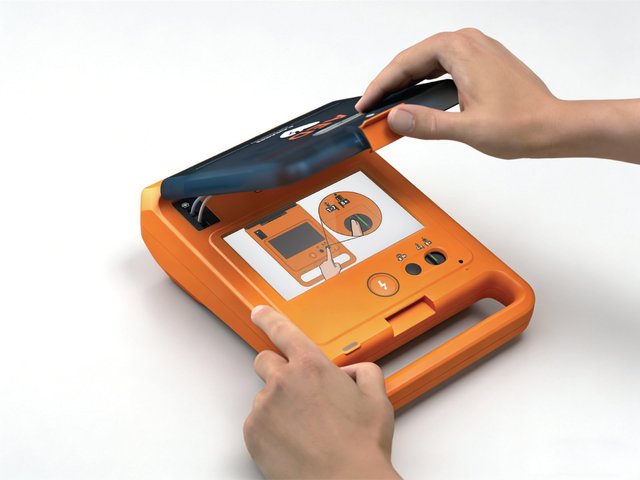
- Clear voice promptsStaff may never have used one. The AED talks the rescuer through every step, and the G Series adjusts its volume automatically in noisy places such as a sports hall or playground.
- Robust buildSchool equipment gets knocked about. The G Series is protected against dust and water (IP55) and can withstand a 1.5 m drop.
- Simple upkeepLook for self-testing, clearly dated pads and a battery with a long standby life.
Where to keep it
Put it somewhere central and easy to reach, such as reception or near the sports hall, where it can be fetched quickly whenever the site is in use. Sign it, make sure all staff know where it is, and think about access out of hours if clubs or hirers use the site. A common rule of thumb is that a defibrillator should be reachable within about three minutes of a collapse, so a large or split site may need more than one. Mark its location on your site plan and in your emergency procedure.
Staff awareness and training
No formal training is needed to use an AED, because it gives voice prompts, but training is still recommended. Many schools include AED awareness in staff first-aid and CPR sessions. The key message is to call 999, start CPR and fetch the AED.
Before you buy
Check the current Department for Education guidance, and any requirements from your academy trust, local authority or insurer. Some schools have already been supplied with a defibrillator through national schemes, and a second device can make sense on a large site.
Looking after it
Check the status indicator on a regular routine, for example weekly, and keep a simple log. Note the expiry dates of the pads and the battery so replacements are ordered in time. The G3 and G3A pads have a validity period of 42 months, and their battery is disposable and maintenance-free with a standby life of more than 6 years under the manufacturer's stated conditions. Replace the pads after any use. We supply replacement defibrillator pads for the G Series and for most other makes. Register the defibrillator on The Circuit, the national defibrillator network, so that the ambulance service can direct a 999 caller to it.
Which defibrillator do we suggest?
We suggest the Comen G Series AED (G3, G3A, G5 and G5A): voice-guided, with adult and paediatric pads pre-connected, up to 360 J, and IP55 protection. Semi-automatic and fully automatic versions are available. Tell us about your school and we will suggest the right model and send a quote. Standard dispatch is 48 hours.
OscarTech UK is an approved supplier on the NHS Supply Chain framework for external defibrillation devices and related services and accessories. If you buy through NHS Supply Chain, contact us to confirm whether the model you need is available under the framework.
This page is general information, not medical advice. Follow your local first-aid and resuscitation guidance and seek clinical advice where you need it.
Do schools need a defibrillator?
Requirements and guidance depend on the country and type of school, so check the current guidance from the Department for Education (or your national equivalent), your academy trust or local authority, and your insurer. Many schools choose to have one because the site is busy and used out of hours.
Can an AED be used on a child?
Many can, with paediatric pads or a child mode. The Comen G Series has adult and paediatric pads pre-connected and a one-touch adult and child switch that adjusts the energy.
Where should a school keep its defibrillator?
Somewhere central, signed and quick to reach whenever the site is in use, such as reception or near the sports hall. Make sure staff know where it is and how it can be reached out of hours.
Do staff need training to use it?
No formal training is needed, because the AED gives voice prompts, but training is recommended. AED awareness is often part of staff first-aid and CPR training.
How often should we check it?
Check the status indicator on a regular routine, such as weekly, and keep a log. Note the pad and battery expiry dates so replacements can be ordered in good time.
How do we get a quote?
Use the form. Tell us about your school and we will come back with a suggested defibrillator and a quote.
Tell us about your site. We will suggest a defibrillator and send you a quote.
Get a defibrillator for your schoolCouldn't find what you're looking for?
Our team can help source the right instrument or confirm a specific reference code for your setting.