
Defibrillators for Care Homes
Care homes look after people who are more likely than most to have a heart problem, with staff on every shift. A defibrillator should be close to where staff are, simple to use at any hour, and part of a plan everyone knows.
Why care homes plan for cardiac arrest
Care homes support older people and people with long-term health conditions, and staff may be the first to respond to a collapse, day or night. Quick CPR and a shock from a defibrillator give the best chance of survival, so staff need to know where the device is and feel able to use it.
What to look for in a care home AED
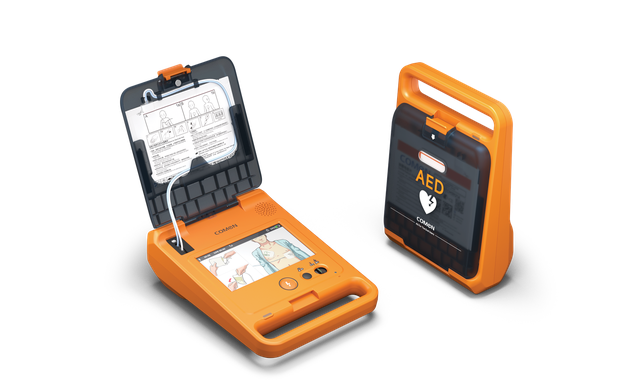
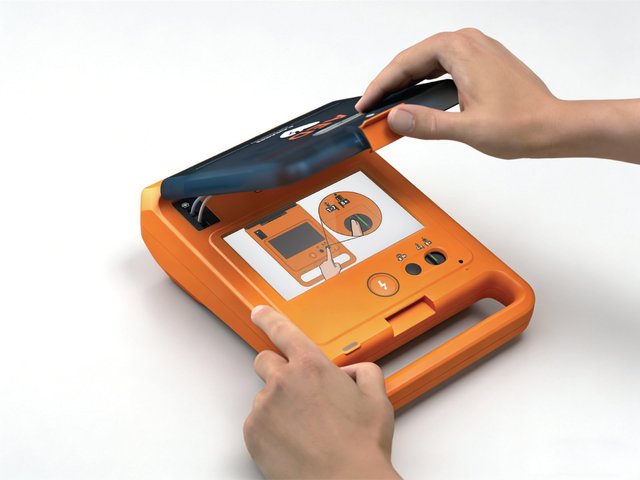
- Simple, voice-guided operationOpening the lid switches the Comen G Series on, and clear voice prompts guide the rescuer through each step. CPR guidance with a real-time metronome helps keep the pace.
- Ready in secondsIt is ready in under 2 seconds after the lid is opened, and the AED is ready to shock in no more than 7 seconds.
- Adult and child padsVisitors can include children. Adult and paediatric pads are pre-connected on the G Series.
- Language and volumeLanguage switching at the touch of a button and automatic volume adjustment.
Your resuscitation policy
Make sure staff understand your resuscitation policy before an emergency, including how it applies to residents who have a DNACPR decision in place. Decisions about an individual resident are clinical and belong to your clinical lead and the resident's care plan. Check what your regulator and insurer expect.
Where to keep it
Keep it somewhere central that staff can reach quickly from every floor and wing, including at night, and sign it. A common rule of thumb is that a defibrillator should be reachable within about three minutes of a collapse, so a large or multi-storey home may need more than one. Make sure agency and night staff know where it is as part of their induction.
Staff awareness and training
No formal training is needed to use an AED, because it gives voice prompts, but CPR and AED awareness for all staff, including night and agency staff, is recommended, with refreshers.
Looking after it
Check the status indicator on a regular routine, for example weekly, and keep a simple log. Note the expiry dates of the pads and the battery so replacements are ordered in time. The G3 and G3A pads have a validity period of 42 months, and their battery is disposable and maintenance-free with a standby life of more than 6 years under the manufacturer's stated conditions. Replace the pads after any use. We supply replacement defibrillator pads for the G Series and for most other makes. Register the defibrillator on The Circuit, the national defibrillator network, so that the ambulance service can direct a 999 caller to it.
Which defibrillator do we suggest?
We suggest the Comen G Series AED (G3, G3A, G5 and G5A): voice-guided, with adult and paediatric pads pre-connected, up to 360 J, and IP55 protection. Semi-automatic and fully automatic versions are available. Tell us about your care home and we will suggest the right model and send a quote. Standard dispatch is 48 hours.
OscarTech UK is an approved supplier on the NHS Supply Chain framework for external defibrillation devices and related services and accessories. If you buy through NHS Supply Chain, contact us to confirm whether the model you need is available under the framework.
This page is general information, not medical advice. Follow your local first-aid and resuscitation guidance and seek clinical advice where you need it.
Do care homes have to have a defibrillator?
Requirements vary by service and nation. Check what your regulator, commissioner and insurer expect, and decide as part of your emergency planning and risk assessment.
What about residents who have a DNACPR decision?
That depends on the individual decision and your policy, so staff should understand it before an emergency. These are clinical decisions: speak to your clinical lead or the resident's care team.
Can staff use an AED without training?
No formal training is needed, because the AED gives voice prompts, but training is recommended so staff feel confident.
Where should the defibrillator be kept?
Somewhere central, signed and reachable quickly from every floor, including at night. Make sure all staff know where it is.
How do we get a quote?
Use the form. Tell us about your home and we will come back with a suggested defibrillator and a quote.
Tell us about your home. We will suggest a defibrillator and send you a quote.
Get a defibrillator for your care homeCouldn't find what you're looking for?
Our team can help source the right instrument or confirm a specific reference code for your setting.